

Maintaining proper water chemistry is essential for any swimming pool. pH and total alkalinity levels must stay within an ideal range to protect equipment, prevent algae growth, and keep swimmers comfortable.
One of the most effective and affordable chemicals for lowering both pH and total alkalinity is muriatic acid.
When handled correctly, it helps restore balance quickly and safely.
What Is Muriatic Acid and How Does It Work?
Muriatic acid is a diluted form of hydrochloric acid.
In pool maintenance, it is used to reduce high pH and high total alkalinity.
The ideal pH for pool water is between 7.2 and 7.8.
When pH rises above this range, chlorine becomes less effective, water can turn cloudy, and calcium deposits may form on surfaces.
Muriatic acid, with a pH of about 1 to 2, neutralizes excess alkalinity and brings the pH back down.
The effect begins immediately, and full mixing takes a few hours.
Benefits of Using Muriatic Acid Over Alternatives
There are other pH reducers on the market, such as dry acid (sodium bisulfate). However, muriatic acid offers distinct advantages. It does not introduce sulfates into the water.
High sulfate levels can damage plaster surfaces, corrode metal parts, and degrade saltwater generator components over time. Muriatic acid avoids these risks entirely.
Additionally, it is widely available at most hardware and pool supply stores, making it a convenient choice for pool owners.
Cost is another factor.
On a per-dose basis, muriatic acid is generally cheaper than dry acid.
A one-gallon jug of 31% strength typically costs between $5 and $12 at home improvement or pool stores.
In contrast, achieving the same pH reduction with dry acid can cost significantly more.
For pool owners who treat their water regularly, this difference adds up.
Safety Precautions When Handling Muriatic Acid
Muriatic acid is corrosive and requires careful handling.
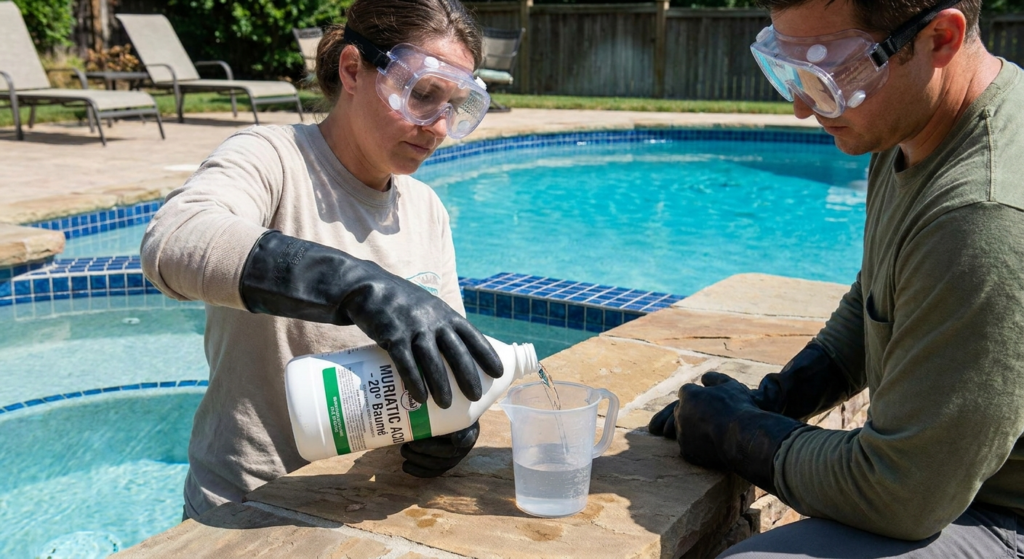
Always wear proper protective gear: acid-resistant gloves, safety goggles, long sleeves, and closed-toe shoes.
A mask or respirator is recommended to avoid breathing fumes. Work outdoors or in a well-ventilated area.
If any acid contacts skin or clothing, wash the area immediately with fresh water. Keep a garden hose or bucket of water nearby.
When mixing, always add acid to water, never water to acid, to prevent violent splashing.
Store the acid in its original container, away from direct sunlight and separate from other pool chemicals, especially chlorine.
Never store it in a garage where fumes can corrode metal surfaces.
Store in a cool, dry, well-ventilated area away from any ignition sources.
Step-by-Step Guide to Adding Muriatic Acid to Your Pool
1. Test Your Pool Water
Before adding anything, obtain an accurate reading of current pH and total alkalinity. Use a liquid test kit or digital probe for best results. Testing strips can give a general idea but are less precise.
2. Calculate the Correct Dose
Your pool’s volume determines how much acid you need.
For a 10,000‑gallon pool with a pH between 7.8 and 8.0, about 16 fluid ounces of 31% muriatic acid is typically required. For larger or smaller pools, adjust proportionally.
Always err on the side of using less; you can add more later.
A pool chemistry calculator can provide exact amounts based on your readings.
3. Prepare and Add the Acid
Turn off the pool pump and any water features.
Fill a plastic bucket with clean water, then slowly add the measured acid. Stir gently with a wooden or plastic stick.
Pour the diluted solution into the deep end of the pool, walking slowly around the perimeter. Avoid splashing onto coping stones or decking. Work slowly and carefully to prevent any accidental spillage.
4. Circulate and Retest
After adding the acid, turn the pump back on and let it run for at least five hours. This allows the acid to mix thoroughly. Retest the water.
If pH and alkalinity are still high, repeat the process with another small dose.
For pool owners who want a reliable and affordable solution for lowering pH, muriatic acid for pools remains a top choice.
Patience is key: making incremental adjustments prevents overshooting the target range.
Small, measured additions are safer and more effective than large doses.
5. Adjust Alkalinity if Needed
Muriatic acid lowers both pH and total alkalinity, but not always at the same rate.
If pH comes down too far while alkalinity remains high, you can raise pH by aerating the water.
If alkalinity drops below 80 ppm, add baking soda (sodium bicarbonate) to bring it back up.
Repeat testing and small adjustments until both parameters are within the ideal ranges.
Consistency in testing will help maintain water quality over the long term.