
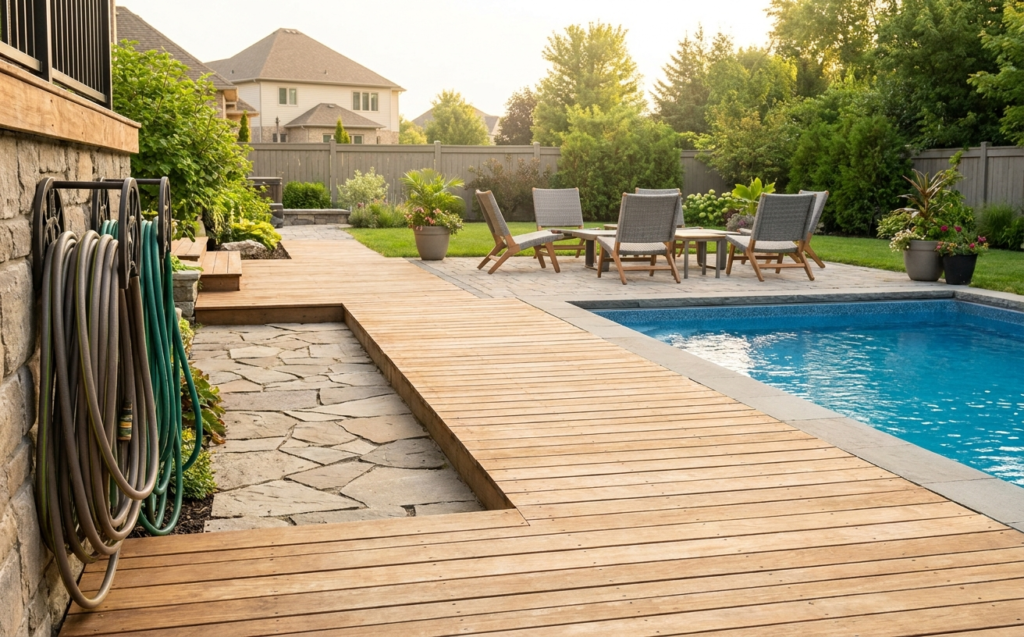

A pool deck can look clean from a distance and still be hard to move through. One hose crosses the patio. A charging cord runs behind a chair. Pool toys sit near the steps. A towel lands on the walkway. An extension cord waits beside a speaker. A float blocks the side gate.
Nobody thinks much about these things until someone trips, steps awkwardly, or has to keep moving objects just to walk across the backyard.
Good pool deck design is not only about furniture and style. It is about movement.
People should be able to walk from the back door to the pool, from the pool to the bathroom, from the chairs to the grill, and from the side gate to the patio without dodging clutter.
A smooth deck makes the backyard feel calmer. It also makes the pool area safer and more enjoyable for kids, guests, pets, and older relatives.
Walk the Main Routes
Start by walking the backyard the way people actually use it.
Go from the back door to the pool steps. Then walk from the pool to the towel area. Walk from the patio table to the grill. Walk from the side gate to the seating area. Walk from the pool to the nearest bathroom.
Notice what gets in the way.
Is a chair too close to the edge? Does a hose cross the route? Are toys stored where people walk? Does a planter narrow the path? Do people have to step around outdoor cords?
These walking routes matter more than decorative corners.
If the main paths are clear, the backyard feels easier immediately.
Create a No-Drop Zone Near the Pool Edge
The pool edge should not become a landing spot for everything. It is common for people to drop goggles, towels, sandals, cups, dive sticks, and toys right where others need to walk.
Create a no-drop zone.
Make it a family rule that the first two or three feet around the pool edge stay clear except during active use. Towels go on hooks. Toys go in bins. Cups stay on tables. Shoes stay away from the edge.
This rule helps with safety and appearance.
A clear pool edge also makes the water look more inviting because the eye is not distracted by scattered items.
Store Hoses With Intention
Hoses are one of the most common backyard trip hazards. They often sit half-coiled near the pool, stretched across the deck, or tucked behind furniture where someone still catches a foot.
Give every hose a real home.
Use a wall hanger, hose reel, or storage area away from the main walking paths. After use, return it immediately.
This habit may sound small, but it changes the feel of the deck.
A pool area with hoses under control feels more finished. It also reduces the constant “watch your step” feeling that makes outdoor spaces less relaxing.
Rethink Outdoor Power Cords
Outdoor cords need special attention. Speakers, lights, inflators, fans, and tools can all lead to temporary cords crossing the patio.
Temporary cords have a way of becoming permanent.
Review every outdoor cord. Ask whether it is needed, whether it is rated for outdoor use, and whether it crosses a walking route. If a cord must be used, keep it out of high-traffic areas and remove it when the task is done.
Do not let extension cords become part of the patio layout.
A pool deck should feel open and easy, not wired together.
Build a Low-Cord Backyard List
If your family is trying to reduce visual clutter and trip hazards, make a low-cord backyard list. This can include better storage, fewer loose accessories, smarter furniture placement, and pool-related tools that do not add more lines across the deck.
A homeowner might include cordless robotic pool cleaner in that list beside notes about hose storage, outdoor lighting, toy bins, towel hooks, and safe walking paths.
The point is not to make the backyard empty.
The point is to reduce the objects that interrupt movement.
A lower-cord space often feels cleaner even before anything else changes.
Keep Toys Out of Traffic Lanes
Pool toys are fun, but they can take over fast. Floats, balls, dive sticks, noodles, and water guns often drift from the pool into walkways.
Choose one storage area that is close enough for kids to use but not in the main route.
A deck box, mesh bin, or outdoor basket can work. If toys need to dry, choose storage that drains well.
Teach kids that toys left in walking paths may be put away for the rest of the day.
This is not punishment. It is deck safety.
A toy can be fun in the water and a problem on the ground.
Set Furniture Back From the Water
Chairs too close to the pool can make movement difficult. People squeeze behind them, step sideways, or walk too near the edge.
Pull seating back enough to create a clear lane.
This is especially important near steps, ladders, and shallow-end entry points. Those areas already get a lot of traffic.
A chair with a great view is not worth it if it blocks the path everyone uses.
The best pool furniture layout gives people room to sit and room to move.
Add Landing Spots Away From Walkways
Clutter often appears because people need somewhere to put things. If there is no table, they drop cups on the deck. If there are no hooks, towels land on chairs. If there is no bin, toys stay on the ground.
Add landing spots away from walking routes.
A side table for drinks. Hooks for towels. A bin for toys. A shelf for sunscreen. A basket for goggles.
The key is placement.
A landing spot should be close to where people need it, but not in the way.
Good storage supports natural behavior instead of fighting it.
Think About Bare Feet
Pool decks are often used barefoot. That makes small hazards more important.
Look for sharp corners, rough storage bins, hot surfaces, loose screws, broken toy pieces, and small objects that hurt when stepped on.
Do a barefoot-friendly check before busy swim days.
This is especially useful before kids have friends over or before a family gathering.
A deck that is comfortable barefoot feels more inviting.
It also reduces the constant need for warnings.
Keep the Bathroom Route Clear
The path from pool to bathroom gets heavy use. It should be one of the clearest routes in the home.
Walk it after a normal swim session. Are there towels on the floor? Shoes near the door? a rug that slips? toys near the threshold? furniture blocking the route?
Fix the route before fixing less-used areas.
Wet people will take the easiest path. Make that path safe and simple.
A clear bathroom route also protects the inside of the house from wet detours.
Use Evening Light to Reveal Problems
Some deck hazards are easier to see at night. Walk the pool area after sunset with the normal patio lights on.
Can you see the steps clearly? Are hoses visible? Do cords disappear into shadows? Are toys easy to spot? Does furniture create dark corners?
Good lighting is part of movement design.
It does not need to be bright everywhere. It needs to show people where to walk and what to avoid.
A beautiful pool area still needs practical visibility.
Do a Five-Minute Path Reset
At the end of pool time, reset the walking paths. Not the whole backyard. Just the paths.
Move toys. coil hoses. pick up towels. push chairs back. remove cups from the deck. clear the entry point.
This five-minute habit prevents clutter from becoming normal.
It also makes the next swim easier.
A deck that starts clear is more likely to stay clear.
An Easier Deck Feels Like a Better Backyard
People often think a backyard needs major upgrades to feel better. Sometimes it only needs clearer paths.
When hoses are stored, toys are contained, cords are limited, towels have hooks, and furniture leaves room to move, the whole pool area feels more relaxed.
The water may be the main attraction, but the deck shapes the experience.
A pool that is easy to approach, use, and leave will be used more often. Guests feel more comfortable. Kids get fewer warnings. Adults stop stepping around clutter.
A better pool deck is not only prettier. It is easier on the body and the mind.
That is what good outdoor design should do.