
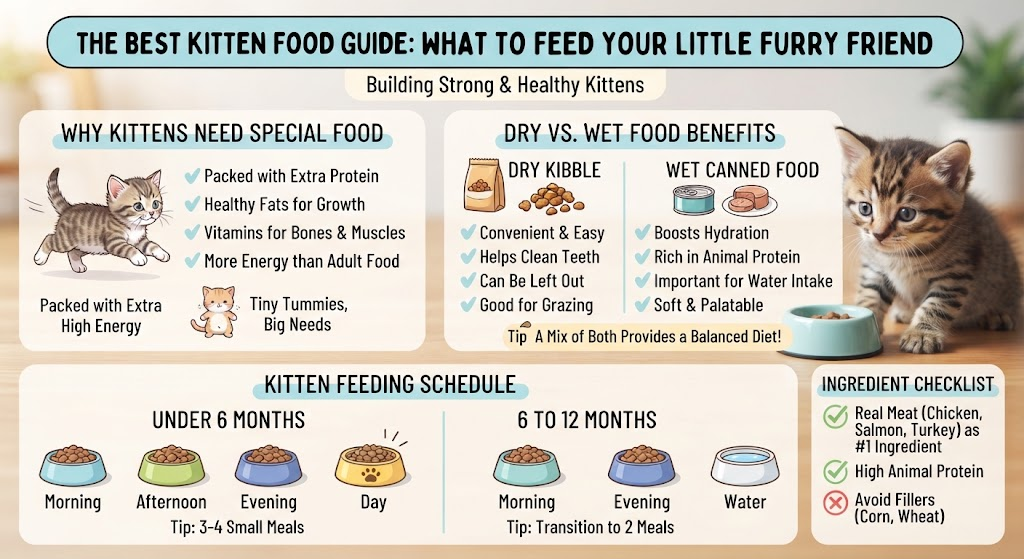

Bringing a tiny new kitten home is one of the most exciting things ever. You get to play with tiny paws, listen to soft purrs, and watch them explore every corner of the house. But one of the most important jobs you have as a new pet parent is figuring out what kind of Kitten Food to put in their little bowls. Little cats have tiny tummies and fast-growing bodies. They need special kitten food that is packed with extra protein, healthy fats, and vitamins to help their bones and muscles grow strong. Adult cat food just will not cut it because it lacks the high energy and nutrients that growing babies need every single day.
When you walk down the pet store aisle, the rows of brightly colored cans and bags can feel super overwhelming. You will see words like wet food, dry kibble, grain-free, and pate. The secret to choosing the right kitten food is looking at the ingredient list on the back of the package. Real meat like chicken, turkey, or salmon should always be the very first ingredient listed. This means the meal is high in animal protein, which is vital for building strong muscles and keeping your little hunter full of energy. Avoid products loaded with cheap fillers like corn or wheat, as these do not give your growing pet the fuel they truly need to run and jump around.
Transitioning your new little buddy to a brand-new diet takes a little bit of patience and time. If you change their meals too fast, you might end up with an upset tummy and messy accidents on your living room rug. The best way to switch their kitten food is by mixing a tiny bit of the new brand into their old favorite food over the course of a week. Start with mostly old food and a spoonful of the new option, then slowly add more new food each day. This gentle method lets their tiny digestive system adjust smoothly without any painful cramping or refusing to eat their daily meals.
Wet canned options and dry crunchy kibble both have wonderful benefits for your little feline companion. Dry kibble is super convenient, easy to leave out during the day, and helps keep their tiny teeth clean by scraping away plaque as they crunch. On the other hand, canned wet kitten food gives them a huge boost of hydration, which is extra important because many cats forget to drink enough water from their bowls. I always like to mix a little bit of both worlds for my pets. Giving them crunchy kibble in the morning and a tasty wet meal at night keeps dinner time fun, exciting, and nutritionally balanced.
Feeding schedules are another big piece of the puzzle when raising a healthy and happy young cat. Unlike adult cats who usually eat twice a day, growing babies have endless energy and need to be fed multiple small meals throughout the day. A tiny feline under six months old usually needs three or four meals of kitten food spaced out evenly from morning until night. As they get a little older and closer to their first birthday, you can slowly drop down to two meals a day. Always keep a bowl of fresh, clean water nearby so they can take a cool sip whenever they finish playing.
Complete Kitten Nutritional Breakdown
| Nutrient Type | Why Growing Cats Need It | Best Natural Sources |
| Animal Protein | Builds strong muscles and fuels daily play | Chicken, turkey, salmon, beef |
| Healthy Fats | Provides high energy and brain development | Omega-3 fatty acids, fish oil |
| Essential Vitamins | Supports bone growth and a healthy immune system | Sweet potatoes, carrots, spinach |
| Moisture / Water | Prevents dehydration and aids digestion | High-quality wet canned meals |
Understanding Protein and Fat Requirements
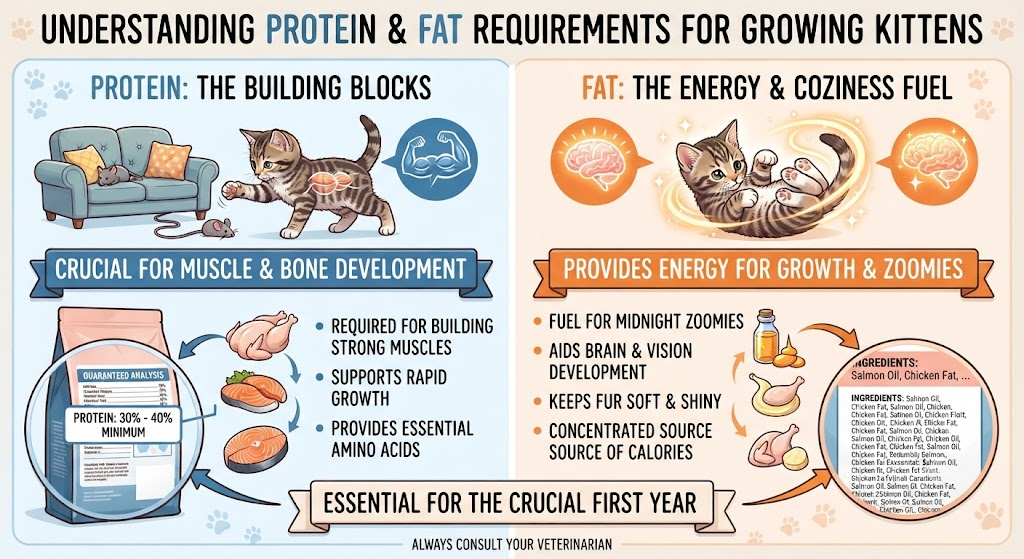
Proteins are the absolute building blocks of life for a tiny growing cat. Without high levels of animal protein, your little pet will not develop the strong muscles they need to climb your couch and chase toy mice. Premium kitten food is specifically formulated to have much higher protein percentages than regular adult cat meals. You should always check the guaranteed analysis label on the back of the bag to ensure protein makes up at least thirty to forty percent of the total recipe. This high concentration guarantees they get maximum nutrition in every single bite they take.
Healthy fats are just as important as protein for your little furry explorer. Fats give them the massive burst of energy required for their crazy midnight zoomies across the bedroom floor. Furthermore, specific fats like omega-3 fatty acids help develop their growing brains and keep their fur soft, shiny, and touchable. When you shop for quality kitten food, look for ingredients like salmon oil or chicken fat near the top of the label. These wholesome fats taste amazing to cats and provide the deep nourishment required during their crucial first year of life.
Wet Food vs. Dry Kibble: Making the Right Choice
Deciding between wet and dry meals can feel like a tough puzzle for new pet owners. Dry kibble is fantastic for busy schedules because you can leave it in a bowl without worrying about it spoiling quickly in the open air. Many veterinarians also note that crunchy kibble helps reduce tartar buildup on tiny teeth. However, dry kitten food lacks the moisture content that cats naturally get from hunting fresh prey in the wild, which means they have to drink a lot more water separately to stay fully hydrated.
Wet canned meals act like a magic trick for getting picky eaters to finish their dinner. The strong, meaty aromas drive cats wild and make mealtime the best part of their day. More importantly, wet kitten food contains up to eighty percent water, which protects their kidneys and urinary tract from future health problems. My personal favorite approach is combining both types. I feed a small portion of crunchy kibble in the morning for dental health and a savory can of wet food at night for ultimate hydration and flavor.
How to Establish a Healthy Feeding Schedule
Creating a predictable daily routine helps your little pet feel safe, secure, and ready for mealtime. Young felines love habits, and knowing when food is coming stops them from begging or trying to steal food off your dinner plate. For babies under four months old, serving four small portions of kitten food throughout the day keeps their blood sugar stable and their bellies happy. Never leave huge piles of food out all day unless your vet specifically tells you to, because free-feeding can lead to overeating and tummy aches.
As your pet grows past the six-month mark, you can adjust their daily routine to three meals instead of four. Always measure out the portions using a standard measuring cup rather than just guessing. Pet food bags have handy feeding charts printed on the side that tell you exactly how much kitten food is right based on their current weight and age. Sticking to these helpful guidelines prevents your sweet little companion from gaining too much extra weight as they transition into adulthood.
Dealing with Picky Eaters and Tummy Troubles
Sometimes you might bring home a brand-new bag of premium food only to watch your kitten walk away with a little sniff of disgust. Picky eaters can be very frustrating, but you should never let them go completely without eating if they refuse their meal. If your kitten food choice is being ignored, try warming up a wet can slightly in the microwave for a few seconds to release a stronger, tastier aroma. You can also mix in a tiny splash of low-sodium bone broth to make the bowl irresistible.
Tummy troubles and upset stomachs are another hurdle you might face during the first few months. If your pet has runny stool or seems uncomfortable after eating, it usually means you switched their diet way too fast or the food contains an ingredient that does not agree with them. High-quality kitten food with limited, simple ingredients is usually the best fix for sensitive bellies. If tummy issues last for more than a couple of days, always schedule a quick visit with your local veterinarian to make sure everything is completely fine.
Transitioning From Mother’s Milk to Solid Meals
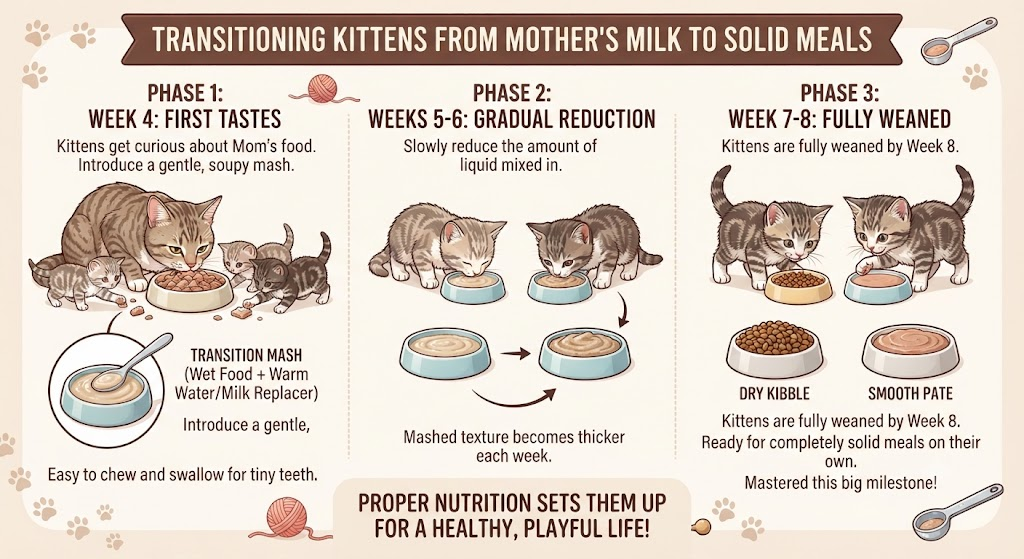
The journey from mother’s milk to solid food is a huge milestone in every young cat’s life. Around four weeks of age, kittens start getting curious about what their mom is eating and will try to sneak bites from her bowl. This is the perfect time to introduce a gentle transition mash. You can mix wet kitten food with a little bit of warm water or kitten milk replacer to create a smooth, soupy paste that is super easy for their tiny teeth to chew and swallow.
Over the next few weeks, you can slowly reduce the amount of liquid you mix into the bowl until they are eating completely solid meals on their own. By the time they reach eight weeks old, most kittens are fully weaned and ready to crunch down on dry kibble or enjoy smooth pate all by themselves. Watching them master this big step is super rewarding, and providing the right kitten food during this phase sets them up for a long, healthy, and playful life ahead of you.
Frequently Asked Questions
1. When should I start feeding my cat kitten food?
You can start introducing soft, wet kitten food as a mush when they are around four weeks old. By eight weeks, they should be eating solid meals entirely on their own every single day.
2. How long should my cat stay on kitten food?
Most cats need to stay on specialized kitten food until they reach about one full year of age. After their first birthday, you can slowly transition them over to adult cat food formulas.
3. Is wet food better than dry food for my little cat?
Both options have unique benefits, but a mix of both is often ideal. Wet kitten food provides essential hydration, while dry kibble is great for convenience and keeping teeth clean.
4. How many times a day should I feed my young cat?
Babies under six months old need three to four small meals of kitten food daily because of their fast metabolism. Older kittens can drop down to two meals a day.
5. What should I do if my kitten refuses to eat?
Warm up wet kitten food slightly to enhance the smell, or mix in a spoonful of warm water. If they still refuse to eat after twenty-four hours, call your vet.
6. Can adult cats eat kitten food safely?
An adult cat can eat kitten food occasionally without getting sick, but it is not recommended long-term. The high calorie and fat counts can lead to unwanted weight gain in older cats.
Conclusion
Choosing the right kitten food is one of the most loving choices you can make for your new furry best friend. By picking high-protein recipes, balancing wet and dry meals, and setting up a steady feeding routine, you give your little pet the absolute best start in life. Every tiny purr and playful pounce makes all the extra care completely worth it. What is your new cat’s absolute favorite flavor of food? Drop a comment below and share your favorite pet stories with us today!