


The story of Bumpy Johnson’s Daughter Elise & Malcolm X and her connection to Malcolm X represents one of the most fascinating chapters in African American history. These two influential figures shaped civil rights movements and community transformation during the 1950s and 1960s. Understanding their relationship gives us insight into how families, activism, and personal conviction intersected during America’s most pivotal moments. Bumpy Johnson’s daughter Elise witnessed firsthand the struggles of her community and became instrumental in bridging the gap between street life and social responsibility. This article explores their remarkable journey, their beliefs, and the lasting impact they made on generations to come. Their story proves that ordinary people can create extraordinary change.
WHO WAS BUMPY JOHNSON AND HIS FAMILY BACKGROUND?
Ellsworth “Bumpy” Johnson became Harlem’s most legendary figure during the mid-20th century. Born in 1905, Bumpy Johnson built an empire that controlled much of Harlem’s underground economy. Despite his criminal activities, he was known for protecting his community and providing for those in need. His family life remained relatively private compared to his public persona. Bumpy Johnson’s daughter Elise grew up understanding both sides of her father’s world. She saw the wealth and power he commanded while also witnessing the struggles of everyday Harlem residents. Her upbringing uniquely positioned her to understand street life and social movements simultaneously. This background shaped her perspective on leadership and community service throughout her life. Elise inherited her father’s protective nature but channeled it toward legitimate causes and social advancement.
THE RISE OF ELISE JOHNSON: BUMPY’S INFLUENTIAL DAUGHTER
Elise Johnson emerged as a powerful figure in her own right, separate from her father’s criminal legacy. She received education and exposure that many Harlem residents didn’t have access to during her childhood. Her parents ensured she understood both their heritage and the broader world beyond Harlem’s streets. Elise became known for her intelligence, grace, and ability to navigate multiple worlds effortlessly. Unlike many children of notorious figures, she refused to become defined solely by her father’s reputation. Instead, Elise Johnson worked toward community empowerment and social responsibility. She developed connections with influential leaders who shared her vision for change. Her diplomatic skills allowed her to communicate effectively across different social classes and communities. Elise’s approach to activism was thoughtful and strategic rather than confrontational. She believed in building bridges between community leaders and grassroots movements.
UNDERSTANDING MALCOLM X’S ROLE IN THE CIVIL RIGHTS ERA
Malcolm X transformed from a prison inmate to one of America’s most powerful voices for Black empowerment and dignity. Born Malcolm Little in 1925, his journey shaped modern civil rights activism fundamentally. Malcolm X represented a different approach than other civil rights leaders of his time. His message emphasized Black self-reliance, pride, and resistance to oppression without apology. The Nation of Islam provided Malcolm X with the platform to spread these revolutionary ideas nationwide. He demanded respect and equality while rejecting gradual integration as the solution. Malcolm X’s speeches electrified audiences and inspired countless individuals to reclaim their identities. His articulation of Black consciousness resonated deeply with urban communities like Harlem. Malcolm X’s approach challenged mainstream civil rights strategies while offering alternative visions of Black liberation and dignity.
HOW DID BUMPY JOHNSON’S DAUGHTER ELISE CONNECT WITH MALCOLM X?
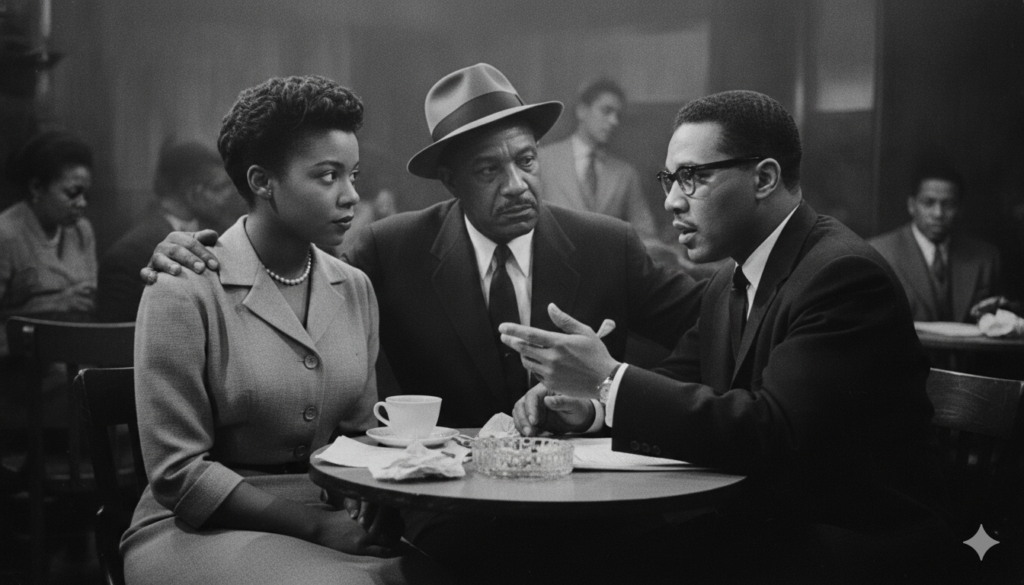
The relationship between Bumpy Johnson’s daughter Elise and Malcolm X developed through their shared commitment to Harlem’s community. Both recognized the need for social change and community protection from exploitation. Malcolm X visited Harlem frequently during his ministry with the Nation of Islam. He built connections with local leaders, including influential figures in Bumpy’s circle. Elise Johnson appreciated Malcolm X’s strength and his commitment to Black empowerment. Their relationship represented mutual respect between community figures working toward similar goals. Bumpy Johnson’s daughter Elise understood that Malcolm X’s message addressed real problems facing her community. She recognized his sincerity despite his controversial reputation among mainstream society. Their connection wasn’t merely personal but deeply rooted in shared values and community vision. This alliance demonstrated that effective change required diverse approaches and cooperative leadership.
THE HISTORICAL CONTEXT: HARLEM IN THE 1950S AND 1960S
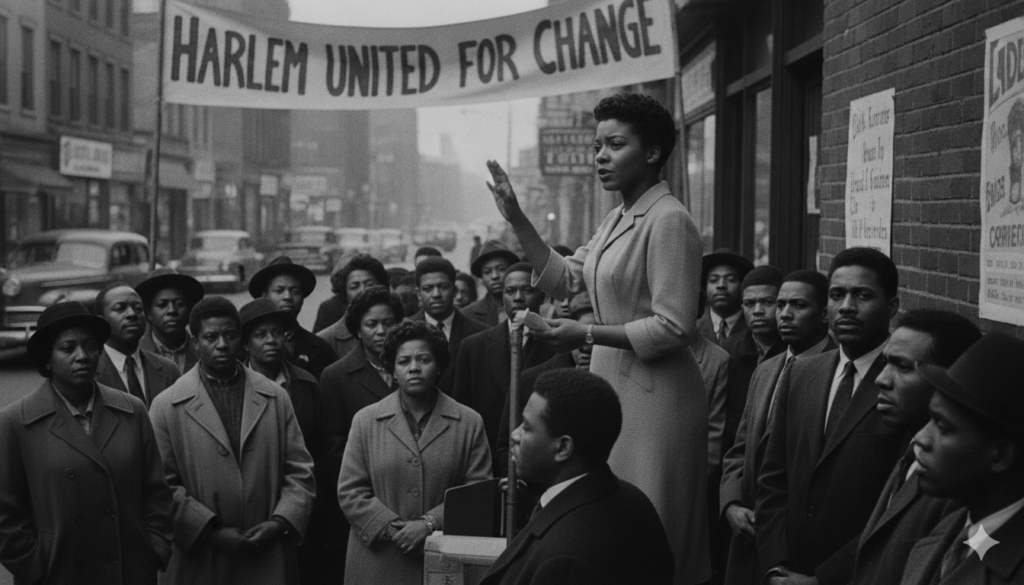
Harlem during the 1950s and 1960s was experiencing profound transformation and internal conflict. The neighborhood struggled with poverty, drug addiction, police brutality, and systemic inequality. Yet Harlem also became the creative and intellectual center for Black American culture. Jazz music, literature, and art flourished despite economic hardship surrounding these cultural achievements. Bumpy Johnson’s daughter Elise witnessed these contradictions daily in her community. Economic opportunities remained limited while social consciousness was rising rapidly. Malcolm X’s arrival in Harlem coincided with growing frustration about unequal treatment and limited rights. The Nation of Islam attracted thousands of Harlem residents seeking dignity and direction. This environment created space for figures like Elise Johnson to emerge as bridge-builders. Understanding this historical moment is essential to appreciating their contributions and relationships
THE INFLUENCE OF BUMPY JOHNSON’S DAUGHTER ON COMMUNITY ACTIVISM
Elise Johnson leveraged her unique position to promote community welfare and social responsibility. Her father’s resources and protection provided her safety to pursue activism openly. Bumpy Johnson’s daughter Elise worked to redirect her family’s influence toward legitimate charitable endeavors. She became involved in educational programs and community centers serving Harlem youth. Elise’s approach emphasized practical solutions rather than revolutionary rhetoric alone. She believed that real change required both ideological commitment and tangible community resources. Her work included scholarship programs, youth mentorship, and neighborhood improvement initiatives. Bumpy Johnson’s daughter Elise demonstrated that wealthy families could contribute positively to their communities. She earned respect from both street-level activists and mainstream community organizations. Her legacy shows how privilege combined with genuine concern creates lasting community transformation.
MALCOLM X’S MISSION AND STREET CREDIBILITY IN HARLEM
Malcolm X’s appeal in Harlem transcended typical religious messaging because of his street credibility. He understood poverty, discrimination, and systemic inequality from personal experience. His prison years taught him the realities of American injustice firsthand. Malcolm X spoke the language of Harlem residents while elevating their consciousness. He didn’t condescend to street communities but rather validated their experiences and anger. His message combined spiritual guidance with practical social analysis. Malcolm X established a temple in Harlem that became a community institution offering security and purpose. He attracted followers who felt abandoned by mainstream society and government. The Nation of Islam under Malcolm X’s leadership provided structure, discipline, and hope. His presence validated street communities while challenging them to pursue self-improvement and dignity.
THE COMPLEX RELATIONSHIP BETWEEN STREET POWER AND POLITICAL INFLUENCE
Bumpy Johnson’s daughter Elise understood the delicate balance between street power and legitimate influence. Her father’s criminal empire provided both protection and moral complications. She learned that true power meant earning respect through multiple channels simultaneously. Bumpy Johnson’s daughter Elise navigated between her father’s world and emerging civil rights leadership. This unique position allowed her to communicate effectively across traditionally separated communities. Street credibility and political influence required different skill sets and approaches. Elise Johnson developed mastery in both languages, earning trust from diverse groups. Her example shows how individuals can transcend limiting categories through genuine commitment and intelligence. The relationship between Bumpy Johnson’s daughter Elise and figures like Malcolm X demonstrated that legitimate power came from community respect. Neither street authority nor political position alone proved sufficient without genuine community support and genuine care.
PERSONAL VALUES VERSUS PUBLIC REPUTATION: NAVIGATING CONTRADICTION
Both Bumpy Johnson’s daughter Elise and Malcolm X faced constant tension between personal values and public reputation. Society attempted to define them through narrow stereotypes and assumptions. Elise Johnson refused to be limited by her father’s criminal legacy or gender expectations. Malcolm X transcended his prison history and early extremist reputation through consistent personal growth. Both figures demonstrated that humans contain multitudes and shouldn’t be reduced to single dimensions. Bumpy Johnson’s daughter Elise showed that children of criminals could choose different paths. Malcolm X proved that reformed individuals could become trusted moral leaders. Their examples challenged simplistic narratives about people and their possibilities. Personal integrity required constant effort against external categorization and internal doubt. These leaders prioritized their authentic values over convenient public narratives about themselves.
LEGACY AND LASTING IMPACT ON AFRICAN AMERICAN COMMUNITIES
The legacy of Bumpy Johnson’s daughter Elise and Malcolm X continues influencing African American communities today. Their work established templates for community leadership and social change that remain relevant. Bumpy Johnson’s daughter Elise’s emphasis on education and practical support shaped modern community development approaches. Malcolm X’s messaging about self-determination and dignity continues inspiring activists and leaders. Their contributions transcended their specific historical moment to address timeless community challenges. Young leaders today study both figures to understand effective strategies for social transformation. The relationship between Bumpy Johnson’s daughter Elise and Malcolm X demonstrated that diverse approaches strengthen movements. Communities benefit when multiple leadership styles work toward common goals. Their legacies remind us that ordinary people can achieve extraordinary impact through commitment and courage. Modern social movements continue invoking their examples and building on their foundational work.
HOW THEIR STORY RELATES TO MODERN ACTIVISM AND LEADERSHIP
Contemporary activists and community leaders continue learning from Bumpy Johnson’s daughter Elise and Malcolm X’s examples. Modern movements face similar challenges about strategy, representation, and resources. Their approach to community organizing emphasizes relationship-building and authentic commitment. Current leaders recognize that effective change requires both street-level support and institutional cooperation. Bumpy Johnson’s daughter Elise’s emphasis on education remains crucial in contemporary community development. Malcolm X’s message about self-determination speaks powerfully to current identity politics and empowerment movements. Their examples suggest that sustainable change requires patience, strategy, and genuine community accountability. Modern activists study how these historical figures navigated complex political landscapes successfully. The integration of moral courage with practical strategy remains essential for contemporary social work. Bumpy Johnson’s daughter Elise and Malcolm X provide templates that continue generating relevant insights for current and future generations.
COMPREHENSIVE INFORMATION TABLE: KEY FIGURES AND TIMELINE
| Aspect | Bumpy Johnson | Elise Johnson (Daughter) | Malcolm X |
| Birth Year | 1905 | 1930s (estimated) | 1925 |
| Primary Role | Harlem Crime Boss | Community Activist | Civil Rights Leader |
| Main Influence | Underground Economy | Educational Programs | Nation of Islam, Black Empowerment |
| Leadership Style | Protective, Street Authority | Diplomatic, Bridge-Building | Inspirational, Revolutionary |
| Key Achievement | Community Protection | Youth Empowerment | Black Consciousness Transformation |
| Primary Location | Harlem, New York | Harlem, New York | National (Harlem Base) |
| Connection Type | Family | Family/Community | Professional/Ideological |
| Time Period Active | 1930s-1968 | 1950s-1970s+ | 1950s-1965 |
| Community Impact | Economic/Street Safety | Educational/Social Services | Political/Spiritual Awakening |
| Legacy Focus | Community Loyalty | Practical Empowerment | Ideological Revolution |
| Approach to Power | Direct Control | Institutional Building | Message Dissemination |
| Relationship Status | Father-Daughter | Connected through Community Values |
(FAQs)
Q1: What Was the Relationship Between Bumpy Johnson’s Daughter Elise and Malcolm X?
A: They shared mutual respect and commitment to Harlem’s community welfare, working together for social empowerment and dignity.
Q2: How Did Bumpy Johnson’s Criminal Background Affect His Daughter Elise?
A: It gave her access to resources she used strategically for education and community programs while rejecting his criminal path.
Q3: What Were Malcolm X’s Main Messages That Resonated With Harlem?
A: He promoted Black self-reliance, dignity, resistance to oppression, and self-defense against systemic inequality and police brutality.
Q4: Why Is Bumpy Johnson’s Daughter Elise an Important Historical Figure?
A: She proved that privilege combined with genuine commitment creates lasting community impact and educational empowerment.
Q5: How Did Harlem’s Social Climate Influence Both Figures’ Activism?
A: The neighborhood’s poverty, cultural richness, and systemic inequality created urgent need for alternative leadership and solutions.
Q6: What Can Modern Leaders Learn From These Historical Figures?
A: Authentic commitment, diverse leadership styles, practical solutions, and genuine community accountability create sustainable social change.
Conclusion
The story of Bumpy Johnson’s daughter Elise and Malcolm X represents far more than a historical anecdote about two influential figures. Their connection embodies the complexity of leadership during America’s most transformative era. Bumpy Johnson’s daughter Elise and Malcolm X both understood that genuine change requires multiple approaches working simultaneously. Neither figure sought personal glory; instead, they genuinely committed to elevating their communities. Their examples challenge us to think beyond simple categorizations and stereotypes about people. We learn that redemption, growth, and positive impact remain possible regardless of circumstances. Bumpy Johnson’s daughter Elise’s legacy emphasizes practical community work and institution-building. Malcolm X’s legacy focuses on consciousness-raising and ideological transformation.