
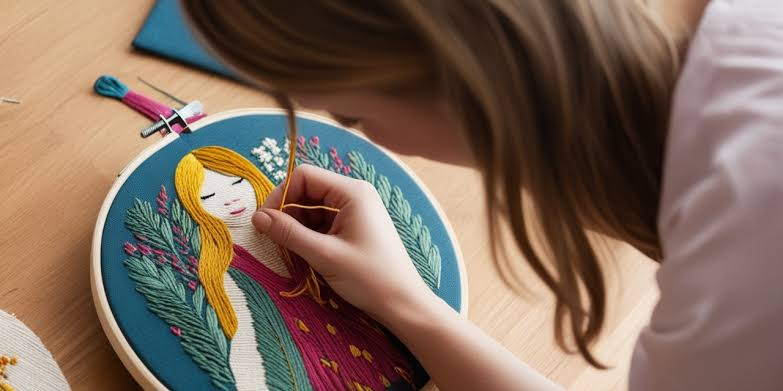

Free time can be a good opportunity to step away from screens, slow down, and make something with your own hands. This is one reason Craft Hobbies continue to attract people of different ages and interests. From drawing and painting to paper crafts and digital illustration, creative activities offer many ways to spend time without following a strict routine.
The appeal of Craft Hobbies is that there is no single correct way to enjoy them. Some people prefer working with physical materials, while others enjoy creating artwork digitally. If drawing is your preferred creative activity, a drawing tablet for arts and crafts can provide another way to explore illustration and visual design. The best approach is simply to find an activity that matches your interests, available time, and preferred creative style.
Why Should You Try a New Craft Hobby?
Starting a new hobby can bring a useful change to your everyday routine. Many Craft Hobbies encourage you to concentrate on one task instead of constantly moving between work, messages, and social media. Even a short drawing session or simple DIY project can give you a different kind of break.
Creative activities can also help develop skills over time. For example, regular drawing can improve your understanding of shapes and proportions, while sewing or paper crafts can improve hand coordination and attention to detail. Most skills become easier through practice.
There are several reasons to consider trying a new creative activity:
l Encourages creativity: You can experiment with colors, materials, shapes, and ideas.
l Provides a relaxing activity: Focusing on a hands-on project can make free time feel less passive.
l Builds practical skills: Repeated practice can gradually improve technique and confidence.
l Allows personal expression: A handmade project can reflect your own taste and ideas.
l Offers flexible scheduling: Many projects can be completed in short sessions.
This flexibility is particularly useful because Craft Hobbies do not have to take up an entire afternoon. A small project can be completed during a quiet evening, while larger creations can be divided into several stages.
What Are Some Fun Craft Hobbies to Try?
There are many types of creative activities, so beginners can choose according to their interests and preferred materials. You can start with something as simple as a pencil and notebook or explore more specialized techniques as your skills develop.
Drawing and Sketching
Drawing is one of the easiest Craft Hobbies to start because the basic materials are inexpensive and easy to find. Beginners can sketch everyday objects, practice simple shapes, draw characters, or experiment with different styles.
Painting
Painting offers more room for color experimentation. You can work on small paper pieces or larger canvases depending on your available space.
Paper Crafts
Paper crafts are suitable for people who enjoy creating physical objects. Popular examples include:
l Origami
l Handmade cards
l Paper flowers
l Scrapbooking
l Paper decorations
These projects can also be customized for birthdays, holidays, or home decoration.
Clay and Modeling
Air-dry clay and similar materials allow you to create small figures, ornaments, and decorative objects. This type of activity provides a tactile experience and does not require advanced artistic knowledge when starting with simple shapes.
Textile Crafts
Knitting, crochet, embroidery, and sewing are good choices for people who enjoy repetitive and detailed work. Once basic techniques are learned, simple patterns can gradually become more complicated projects.
Digital Art
Digital illustration combines traditional artistic concepts with computer-based tools. Creators can experiment with brushes, layers, colors, and editing without needing to replace physical materials every time they make a mistake. For people interested in technology as well as art, this can be an engaging addition to their Craft Hobbies.
Which Craft Hobbies Can You Do at Home?
You do not need a large studio to enjoy Craft Hobbies. Many activities can be adapted to a small desk, dining table, or corner of a room. The key is to choose projects that match the amount of space and storage available.
Drawing and sketching are especially convenient because they require very little preparation. A notebook and a few pencils can be stored almost anywhere. Painting can also work well at home, although wet materials require a suitable surface and enough space for finished pieces to dry.
Paper crafts are another practical choice. A small box can hold paper, scissors, adhesive, pens, and decorative materials, keeping everything together between projects.
For those who prefer digital creation, the storage requirements can be even simpler. Finished artwork can be organized in folders instead of taking up physical shelf space. This makes digital Craft Hobbies particularly convenient for people living in apartments or shared spaces.
Before choosing an activity, consider:
l Available space: Will you need a large work surface?
l Storage: Where will you keep unfinished projects and materials?
l Cleaning: Does the activity involve paint, clay, glue, or other messy materials?
l Time: Can the project be paused and continued later?
l Budget: How much do you need to spend before getting started?
Thinking about these factors can help you avoid choosing a hobby that is difficult to maintain in your current environment.
How Can Digital Art Add Variety to Your Craft Hobbies?
Digital art can introduce a different creative experience while still using many of the principles found in traditional drawing. Composition, line quality, color, proportion, and visual balance remain important, but digital tools offer additional ways to experiment.
For example, layers allow different parts of an illustration to be edited independently. Brushes can imitate different artistic textures, while digital colors can be adjusted without repainting an entire section. These features can make experimentation less intimidating, especially for beginners who are still developing their style.
A pen display can make the process feel more direct because users can draw on the screen with a stylus. This approach may feel familiar to people who already enjoy sketching on paper.
One example is the XPPen Artist Artist 12 3rd. It can be used for activities such as:
l Sketching and line drawing
l Digital illustration
l Character design
l Coloring
l Pattern creation
l Visual concept development
The value of a digital tool is not limited to creating finished illustrations. It can also support other Craft Hobbies. For example, you could design a greeting card digitally before printing it, create a pattern for an embroidery project, or develop artwork that will later be used for a handmade decoration.
Digital creation also makes it easier to keep different versions of a project. You can save an early sketch, experiment with another idea, and return to the original later. This freedom can encourage more experimentation without wasting physical materials.
However, equipment should not become the focus of the hobby itself. A tool is most useful when it makes your creative process more comfortable and gives you more room to explore.
How Do You Choose a Craft Hobby That Fits You?
With so many Craft Hobbies available, choosing one can seem difficult. A practical starting point is to think about what kind of creative experience you enjoy.
If you prefer quiet activities with minimal preparation, drawing, coloring, or journaling may be suitable. If you like working with physical materials, paper crafts, clay, jewelry making, or textile crafts may provide a better experience.
Your available time is another important consideration. Some activities can be completed within 20 or 30 minutes, while others require several hours. If your schedule changes frequently, choose a hobby that can be paused easily.
Budget should also be considered. You do not need to purchase every possible tool when starting a new activity. Begin with basic materials and see whether you genuinely enjoy the process before expanding your collection.
It can also help to consider your preferred working style:
l Like detailed work? Try embroidery, jewelry making, or miniature crafts.
l Enjoy visual creativity? Explore drawing, painting, or digital illustration.
l Prefer hands-on projects? Consider clay, paper crafts, or woodworking.
l Like practical creations? Try sewing, knitting, or DIY decoration.
l Want flexible digital work? Explore digital drawing and illustration.
Most importantly, do not judge a hobby only by your first results. The purpose of Craft Hobbies is not necessarily to produce professional-quality work immediately. Learning, experimenting, and gradually improving are all part of the experience.
Conclusion
The best Craft Hobbies are those that fit naturally into your lifestyle and give you a reason to create. Drawing, painting, paper crafts, modeling, textile work, and digital art all offer different ways to explore creativity during your free time.
You can start with a simple project and gradually experiment with new techniques as your interests develop. Whether you prefer physical materials or digital tools, there is no need to rush the process. The most rewarding part of Craft Hobbies is often the freedom to try something new, make mistakes, and turn your own ideas into something you can enjoy.