
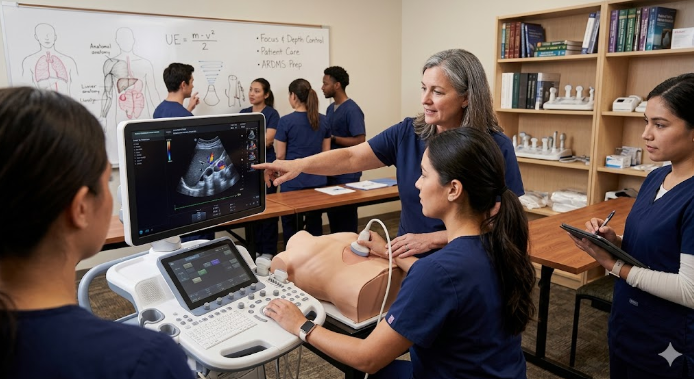

Finding the perfect ultrasound tech school is the first big step toward a rewarding career in healthcare. As a diagnostic medical sonographer, you use sound waves to help doctors see what is happening inside the human body. It is a job that combines cool technology with the chance to help people every single day. Many students feel overwhelmed by all the choices, but picking a school does not have to be scary. You want a program that offers hands-on training, great teachers, and a path to getting your license. This guide will walk you through exactly what to look for so you can feel confident about your future.
What is an Ultrasound Tech School?
An ultrasound tech school is a special college or technical center that teaches you how to use sonography equipment. Think of it like a mix of science class and a high-tech workshop. You will learn about human anatomy, which is just a fancy word for how the body is built. You also learn how to handle the “transducer,” which is the wand that sends sound waves into the body to create a picture on a screen. Most schools offer either an associate degree, which takes two years, or a bachelor’s degree, which takes four. Some people who already have a medical degree just take a one-year certificate program to switch careers quickly.
Why Choosing the Right School Matters
Not every ultrasound tech school is the same. Some schools have brand-new machines that look like they belong in a futuristic movie, while others might have older tools. Picking a high-quality program ensures you are ready for the “real world” of a busy hospital or clinic. If you pick a school that isn’t well-known or accredited, you might find it hard to get a job later. I always tell students to look for schools that have strong ties to local hospitals. This makes it much easier to find a place to practice your skills during your “clinical rotations,” which is basically like a student internship.
Understanding CAAHEP Accreditation
When searching for an ultrasound tech school, the most important letters to look for are CAAHEP. This stands for the Commission on Accreditation of Allied Health Education Programs. It is like a gold star for schools. If a program has this, it means they meet the highest standards for teaching. Graduating from a CAAHEP-accredited program makes you eligible to take the national exams right away. If your school doesn’t have this, you might have to work extra hours for free just to prove you are ready for your license. Always double-check a school’s status on their official website before you sign up.
Essential Courses You Will Take
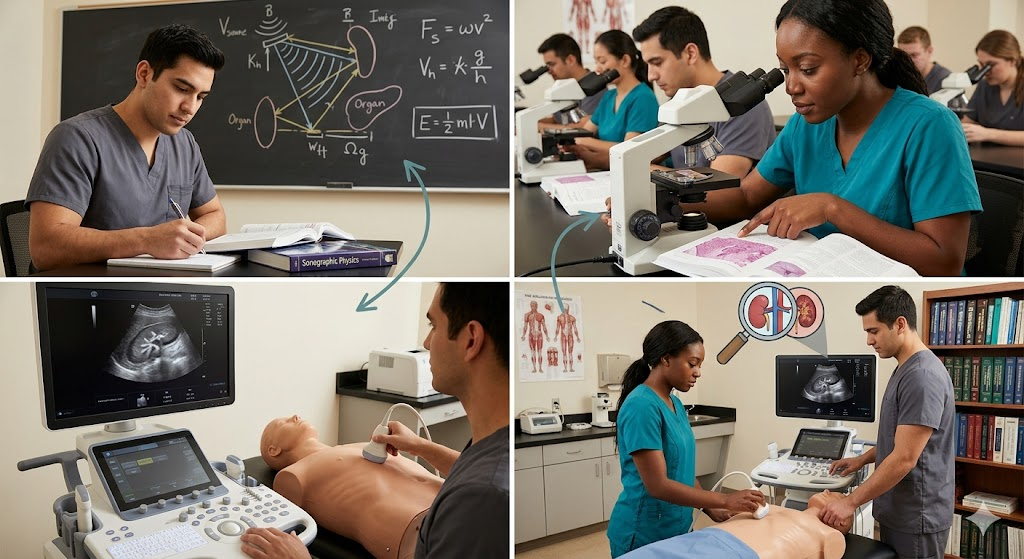
Inside an ultrasound tech school, your schedule will be full of interesting subjects. You won’t just be sitting at a desk all day. You will study “Sonographic Physics,” which explains how sound waves bounce off organs to make images. You will also spend a lot of time in “Pathology” classes, where you learn what a healthy kidney looks like versus one that is sick. Learning these details is vital because a doctor relies on your images to make big decisions. It’s a lot like being a detective; you are looking for clues inside the body to help solve a health mystery.
Practical Hands-On Training
The best part of any ultrasound tech school is the lab time. This is where you actually get to pick up the probe and practice scanning. Most schools have students scan each other so you can feel what it is like to find a heartbeat or look at a liver. This hands-on practice builds your “muscle memory.” Just like learning to ride a bike or play a video game, your hands need to learn exactly how to move the wand to get the clearest picture. Teachers will be right there with you, showing you how to adjust the brightness and contrast on the monitor.
Career Paths for Sonographers
Once you finish your time at an ultrasound tech school, you can choose a specialty. Many people start with “General Sonography,” which covers the abdomen and OB/GYN (babies). However, you could also specialize in “Cardiac Sonography” to look at hearts or “Vascular Sonography” to check blood flow in veins. Some tech experts even work in pediatric units helping tiny babies. Each path requires slightly different training, but a good school gives you a strong foundation in all of them. This flexibility is why so many people love this career field; you can always learn something new.
Essential Ultrasound Tech School Comparison
| Feature | Associate Degree | Bachelor’s Degree | Certificate Program |
| Duration | 2 Years | 4 Years | 12 – 18 Months |
| Common Location | Community Colleges | Universities | Technical Schools |
| Best For | Starting quickly | Management roles | Career changers |
| Cost | Budget-friendly | More expensive | Varies widely |
| Focus | Clinical skills | Skills + Leadership | Specialized training |
Financial Aid and Scholarships
Going to an ultrasound tech school is an investment in yourself, but it does cost money. The good news is that many students qualify for grants or loans to help pay for tuition. There are even special scholarships for people going into the medical field. I suggest filling out the FAFSA (Free Application for Federal Student Aid) as early as possible. Some hospitals will even pay for your school if you promise to work for them after you graduate! This is called “tuition reimbursement,” and it is a fantastic way to finish school without a mountain of debt.
What to Expect During Clinicals
Clinicals are the most exciting part of ultrasound tech school. This is when you leave the classroom and work in a real hospital with real patients. You will be supervised by an experienced pro called a “preceptor.” At first, you will just watch and help out. Eventually, they will let you perform scans on your own. It can be a little nervous-wracking to work with real patients for the first time, but it is the best way to learn. You will see everything from routine check-ups to emergency situations, which prepares you for your first day on the job.
Preparing for the ARDMS Exam
The goal of attending an ultrasound tech school is to pass the ARDMS exam. This test proves that you are a “Registered Diagnostic Medical Sonographer.” Having those initials after your name is like a secret key that opens doors to the best jobs. Most schools spend the last few months of the program helping you study for this big test. They provide practice exams and review sessions to make sure you know your physics and anatomy inside and out. Passing this exam is a huge milestone that makes all that hard work in the lab totally worth it.
Job Outlook and Salary Expectations
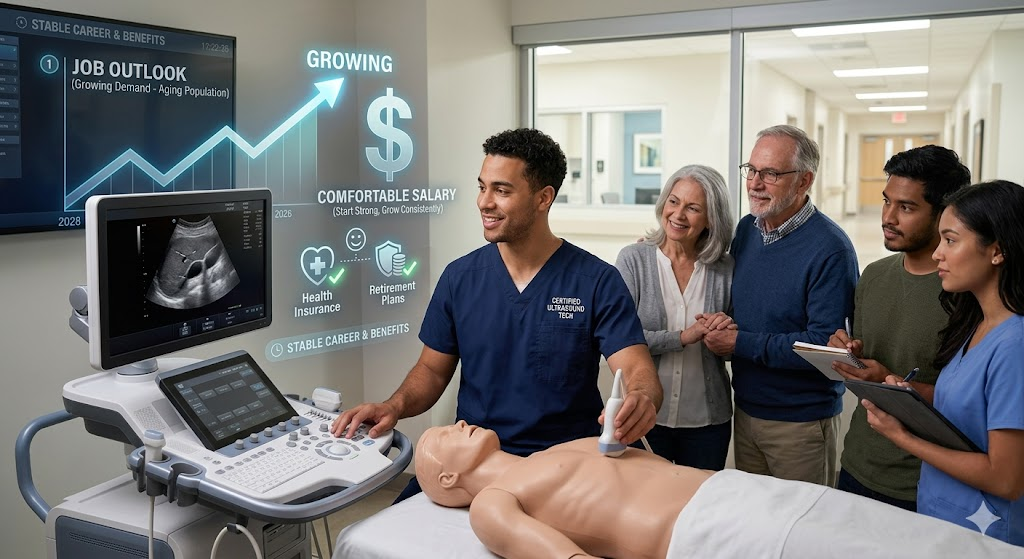
The future looks very bright for anyone graduating from an ultrasound tech school. Because the population is getting older, more people need medical imaging to stay healthy. This means hospitals are always looking for skilled techs. In many places, sonographers earn a very comfortable living, often starting at a higher salary than many other two-year degree jobs. Plus, you get to work in a clean, air-conditioned environment. It is a stable career that offers great benefits, like health insurance and retirement plans, which is important for your long-term happiness.
Frequently Asked Questions
1. How long does ultrasound tech school take?
Most students choose a two-year associate degree program. However, if you already have a college degree, you might finish a certificate program in just over a year.
2. Is ultrasound tech school hard?
It is challenging because you have to learn a lot of science and anatomy. However, if you enjoy hands-on learning and helping people, it is very manageable and fun.
3. Can I take ultrasound tech school online?
You can take some “book” classes online, but you must attend in-person labs and clinicals. You cannot learn to scan without physical practice on the machines.
4. What is the difference between a sonographer and a technician?
In this field, the terms are often used for the same job. However, “Sonographer” is the professional title used by hospitals and the ARDMS.
5. Do I need a license after ultrasound tech school?
Most states and employers require you to be “certified” by the ARDMS. Your school will help you prepare for these important national exams.
6. What are the best qualities for a student in this field?
You should be patient, have a steady hand, and enjoy talking to people. Good “people skills” are just as important as being good with the technology.
Final Thoughts
Choosing an ultrasound tech school is a big decision, but it leads to an amazing life. You will spend your days looking at the wonders of the human body and providing vital information to doctors. If you find a program that is CAAHEP accredited and offers plenty of hands-on time, you are on the right path. Don’t be afraid to visit different campuses and talk to the instructors. Ask them about their graduation rates and where their students find jobs. With a little bit of research and a lot of heart, you will find the perfect place to start your new career!