
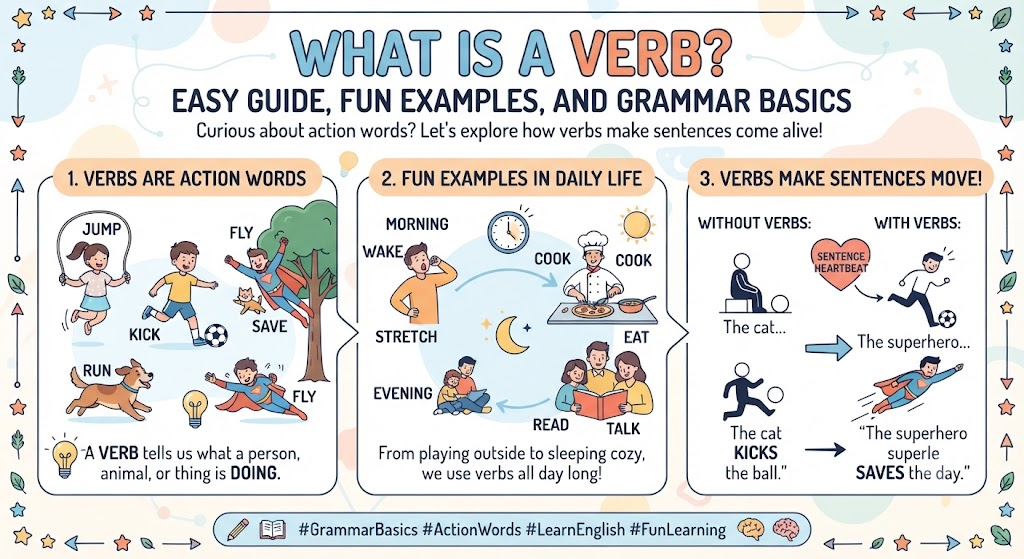

Have you ever wondered how we talk about playing outside, eating pizza, or sleeping in our cozy beds? We use special words called verbs! When you ask yourself What Is a Verb, the easiest answer is that it is an action word. It tells us what a person, animal, or thing is doing. Without these magic words, our sentences would just sit there and do nothing. Imagine trying to talk about your favorite superhero without saying they fly, run, or save the day. It is pretty tricky! Verbs bring our stories to life and make everything move. They are the heartbeat of every sentence you write or speak. Whenever you do something, think something, or even when you just rest, you are using an action word. Let us explore how these fun words work and why we need them to talk about our awesome adventures every single day.
Action Verbs: Doing the Work
The Power of Doing Things
Action verbs are the rockstars of the grammar world. They show physical movement that you can actually see happening right in front of you. When a dog barks, a bird flies, or you kick a soccer ball, you are using a clear action word. These words paint a picture in the reader’s head. If I tell you that Max sprints across the yard, you can picture his legs moving fast! Using strong action words makes your writing exciting and full of energy. Instead of saying a car goes down the street, you might say it zooms. Choosing the best action word helps your stories feel alive. It lets your friends imagine the fun games you play at recess or the cool tricks your pet can do. Action words are super easy to spot once you start looking for them during your daily reading time.
Helping Verbs: The Great Assistants
Teamwork Makes the Sentence Work
Sometimes an action word needs a little boost from a friend. That is where helping verbs step in to save the day! Words like am, is, are, was, and were team up with main action words to show when things happen. For example, in the sentence “She is running,” the word “is” helps the word “running” show current action. They work like a dynamic duo in a comic book. Without the helper, the sentence might feel incomplete or messy. Helping words also help us talk about the past or the future with total ease. When you say “They will play,” the word “will” points your thoughts toward tomorrow. Learning these helper buddies makes your sentence structure much stronger and helps you sound like a pro when you tell your favorite stories to your class.
Linking Verbs: Connecting the Dots
Showing States of Being
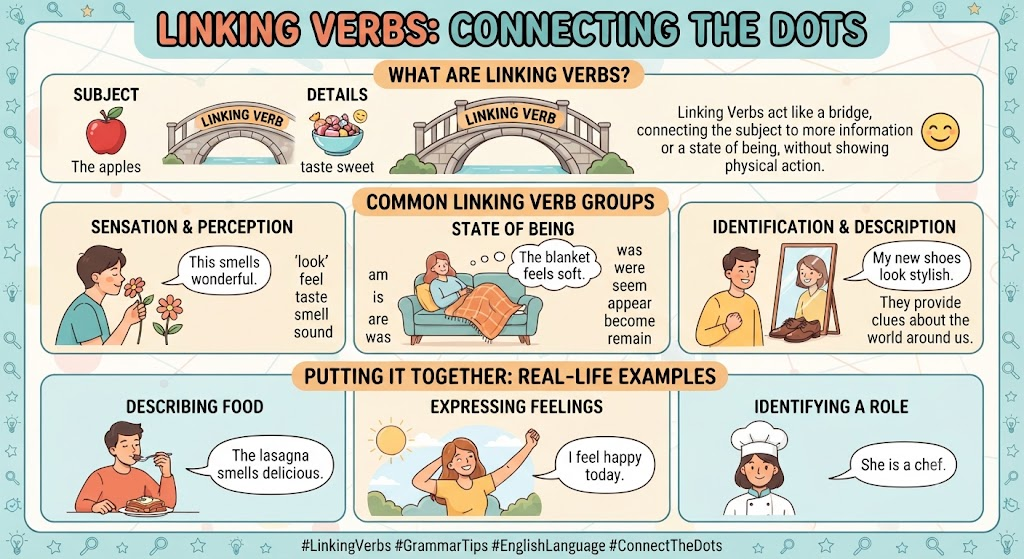
Not every word shows running, jumping, or shouting. Some special words just show how something feels or what it is right now. These are called linking verbs, and they act like a bridge between the subject and more details. Words like look, feel, taste, and seem belong in this special group. When you say “The apples taste sweet,” the word “taste” connects the fruit to its yummy flavor. It does not show a physical action like biting or chewing. Instead, it tells us a state of being. You use these helpful connectors when you describe your brand new shoes, your cozy blanket, or how happy you feel on a sunny Saturday morning. They give us important clues about the world around us without needing any loud motion.
Past, Present, and Future Tense
Time Traveling with Words
Words change their outfits depending on when the fun takes place! This is called tense, and it is like a time machine for your sentences. If you kick a ball right now, you use the present tense. If you kicked that ball yesterday afternoon, the word changes to the past tense, like kicked. If you plan to kick the ball tomorrow at the park, you use the future tense with a helper word like will kick. Changing these endings lets people know the exact timeline of your awesome adventures. It keeps your stories organized so your readers never get confused about when things happened. Practicing these time changes helps you talk about your past birthday parties and your future holiday dreams with absolute clarity.
Spotting Verbs in Everyday Sentences
Your Daily Grammar Hunt
Finding these special words in a book is like going on an exciting treasure hunt! You can start by asking yourself who or what the sentence is talking about. Once you find that main person or object, ask what they are doing or being. The word that answers that second question is your target! For instance, in the sentence “The happy cat purrs,” you find the cat first. Then you ask what the cat does, and the answer is purrs. You can play this fun game with any page in your favorite storybook. Doing this quick mental check helps your brain remember grammar rules without feeling bored. Soon, you will spot these dynamic words instantly on billboards, comic books, and funny notes from your friends.
Making Sentences Grow Stronger
Adding Flavor with Details
Once you master the basic action words, you can make your sentences super cool by adding descriptive details. Instead of writing a plain sentence like “The boy reads,” you can expand it with where and how. You might write “The clever boy reads a thick adventure book under the shady tree.” Now your reader gets a complete movie playing in their mind! Choosing exciting action words instead of boring ones makes a massive difference in how your stories sound. A tired word like walk can become stroll, march, or stomp. Playing with different vocabulary choices lets you show your unique personality and creativity every single time you sit down to write a new story or a fun letter to a friend.
Common Mistakes to Avoid
Keeping Your Grammar Clean
Even smart writers make little slip-ups sometimes, but we can fix them easily! One common mistake is mixing up your time tenses inside the same short story. If you start a sentence in the past, do not suddenly jump to the present unless time actually moved. Another mix-up happens when the subject does not match the helper word correctly. You want to say “He runs” instead of “He run.” Paying close attention to how these word pairs fit together makes your writing smooth and easy to read out loud. Reading your paragraphs back to yourself is the best trick for catching these little errors before you turn your homework in or share your creative writing with your family.
Why These Words Matter So Much
Building Blocks of Language
Think of human language as a giant box of colorful building blocks. Nouns are the fun toys, but these action words are the motors that drive them all around the room. Without them, we could not share our exciting weekend stories, plan games with our teammates, or explain our big ideas to our teachers. They let us express feelings, give instructions for baking cookies, and ask questions about the universe. Every single conversation you have relies on these hardworking parts of speech to make sense. Appreciating how they function gives you a superpower in communication. You learn how to express your thoughts clearly, write fantastic stories, and connect with everyone who reads your wonderful work.
Fun Ways to Practice at Home
Gamifying Your Learning
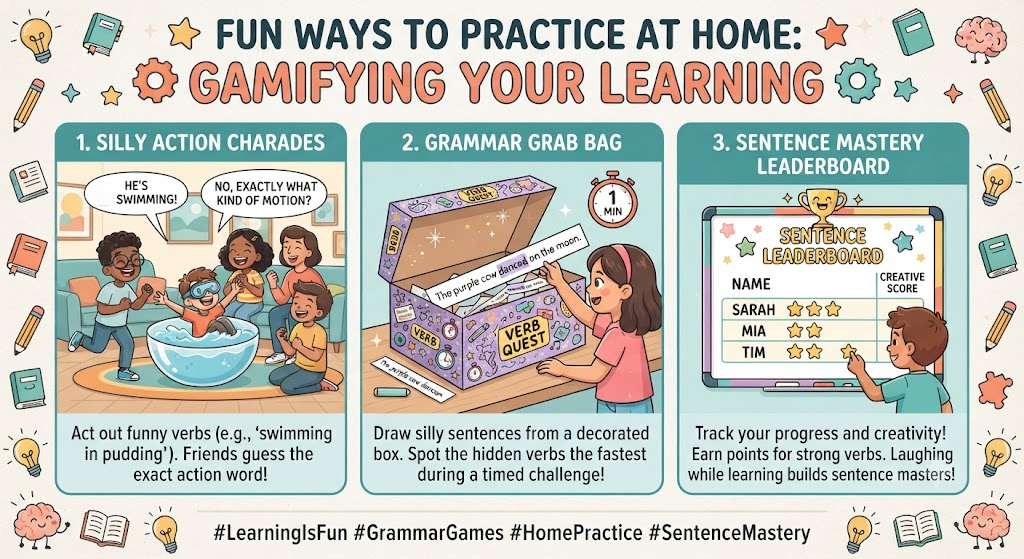
Learning grammar does not have to feel like a boring chore at a wooden desk. You can turn practice time into an awesome game with your friends or family members! Try playing charades where one person acts out a silly motion like swimming in pudding, and everyone else has to guess the exact action word. You can also write silly sentences on small paper strips and draw them from a decorated shoebox. See who can spot the hidden action words the fastest during a timed challenge. Making learning interactive keeps your brain happy and excited for more. The more you laugh while practicing these basics, the faster you will become an absolute master of building strong and creative sentences.
Frequently Asked Questions
What is a simple definition of this grammar term?
It is an action word that shows what a person, animal, or thing is doing, thinking, or feeling in a sentence.
Can a sentence exist without one of these action words?
Almost never! Every complete thought needs at least one main action or linking word to tell the reader what is happening.
How do I tell the difference between an action word and a name word?
Name words tell you who or what the sentence is about, while action words tell you what that person or thing is actually doing.
What are some examples of words that show states of being?
Words like am, is, are, was, were, seem, and feel tell us how someone is or feels rather than showing a physical movement.
Why do these words change their endings sometimes?
They change their form to show the timeline, letting your reader know if the event happened yesterday, today, or tomorrow.
How can I practice spotting these words in my favorite books?
Pick a random sentence on a page, find the main character, and ask what they do to locate the action word right away.